
AMBOSELI NATIONAL PARK
Situated on the Tanzanian border in southern Kenya, Amboseli National Park is 140 miles (220 km) southeast of Nairobi and directly northwest of Mount Kilimanjaro. Following the Masai Mara National Reserve, which is known for its magnificent elephant herds and breathtaking views of Mount Kilimanjaro from Tanzania, it is one of Kenya’s most popular safari destinations.
The rosy pinks and gentle reds of the sky at dawn, when the clouds part and the first rays of sunlight shine on the snow-capped 5,895-meter (19,340-foot) Kilimanjaro peak, create the ideal background for the plains below. It’s even more spectacular at sunset, when the mountain contrasts sharply with the blazing sun.
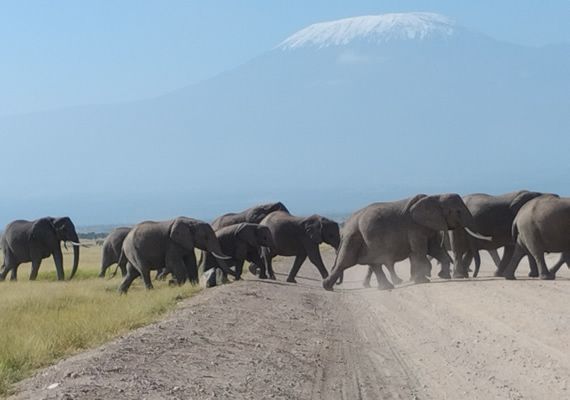 Open plains, acacia woodland, thorn scrub, swamps, and marshlands are the five distinct habitat types found in Amboseli. Lake Amboseli, which is typically dry, and the Ol Donyo Orok massif are to the west. However, the area becomes lush once more and draws migratory birds back when the heavy rains return. The fine alkaline dust that rises from the lake bed is terrible for tires, so be prepared for some impassable roads during periods of intense rain and when the lake is completely dry. The Maasai people refer to the salty dust as Amboseli.
Beyond elephant herds, Amboseli National Park offers a plethora of other amazing safari animals, such as zebras, warthogs, giraffes, buffalo, hippo, impala, wildebeest, and baboons. Its plains are home to unusual antelopes like the long-necked mini giraffe-like gerenuk and the fringe-eared oryx. But compared to the Masai Mara, your chances of seeing predators are lower, and the rhino is extinct.
Because they preyed on their herds of cattle, Maasai hunters once came dangerously close to exterminating Amboseli’s lions. However, populations have steadily grown as a result of years of local communities’ tolerance, and fortunate tourists may also see hyenas, jackals, and cheetahs in addition to lions.
With over 420 species identified, the birdlife is also abundant. There are over ten different species of eagles among the dozens of other birds of prey. The abundance of water birds in the swamp areas, which are nourished by Kilimanjaro’s melting snow, includes seasonal flamingos, pelicans, and over 12 species of heron.
Enkongo Narok, which translates to “black and benevolent,” is the ideal place to watch games. Hippos, a variety of birds, beds of papyrus and waterlilies, herbivores coming to drink, and elephants bathing can all be found in this belt of swamps in the center of the park. You can park and walk to the top of Observation Hill, the Amboseli landmark located just west of Lake Kioko, for a guaranteed chance to see game while admiring the plains.