
LAKE NAKURU NATIONAL PARK
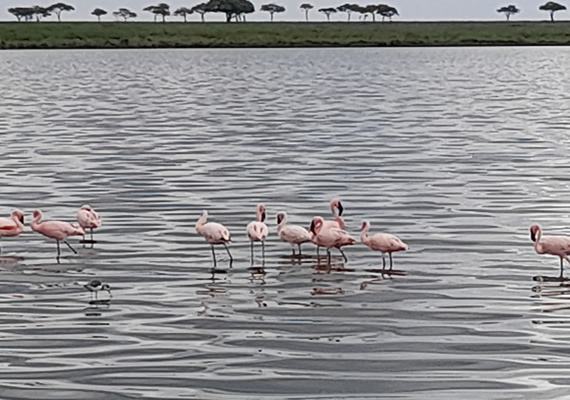
At 1,745 meters above sea level, Lake Nakuru is part of the Great Rift Valley and is well-known for the enormous number of flamingos that eat its algae. Rainfall determines Lake Nakuru’s size, which ranges from 5 to 45 km².
The park is located south of Kenya’s fourth-largest city, Nakuru. The flamingo population has declined recently due to pollution and feeding pressures, but there are now indications that it is recovering.
 There are also a lot of rhinos in Lake Nakuru National Park. These creatures are frequently seen relaxing beneath the shade of the lush acacia trees that surround the lake.
The lake, which is encircled by forests, cliffs, and waterfalls, provides zebra, buffalo, and the endangered Rothschild giraffe with essential water.
The park welcomed the endangered Rothschild Giraffe in 1977. A robust population of Rothschild Giraffes can now be found in Lake Nakuru after these giraffes were moved from western Kenya for their safety.
Additionally, hyenas, hippos, Cape buffalo, and waterbuck are likely to be sighted. Lucky explorers might catch a glimpse of leopards, cheetahs, and lions. In recent years, more leopards have been sighted.
You might spot large pythons dangling from trees in the park’s woodland.
More than 50 mammal species, 400 bird species, and more than 50 plant species can all be found in Lake Nakuru National Park.
The park’s white and black rhinos have flourished in recent years since it was designated a rhino sanctuary in 1987. More than 25 eastern black rhinoceroses and about 70 southern white rhinoceroses were found in the park in 2009.