
SERENGETI NATIONAL PARK
The park is 14,750 km2 (5,700 sq mi)[33] and includes woodlands, savanna, riverine forest, and grassland plains. The park is located in northwest Tanzania and shares a continuous boundary with the Maasai Mara National Reserve to the north. The Ngorongoro Conservation Area is located southeast of the park, Maswa Game Reserve is located southwest, Ikorongo and Grumeti Game Reserves are located west, and the Loliondo Game Control Area is located northeast and east.
The Serengeti Plain’s terrain is incredibly diverse, encompassing open grasslands, hilly woodlands, and savannah. The region’s extreme weather, especially the powerful combination of wind and heat, is what gives it its geographic diversity. A number of volcanoes may have created the region’s varied habitats by adding mountains and craters to the landscape, which in turn shaped the plain’s fundamental geographic features.
The only river in the Serengeti ecosystem that flows continuously is the Mara, which traverses Maasai Mara National Reserve on its way from the Kenyan highlands to Lake Victoria.
Three areas make up the park:
 Serengeti plains: The south’s nearly treeless grassland is the Serengeti’s most well-known feature. It features granite formations called koppies, which act as predator observation points. An edaphic plant community known as the Volcanic Grasslands grows on soils made from volcanic ash from neighboring volcanoes.
Western Corridor: The Grumeti and Mbalageti rivers are the primary geographical feature. There are a few small mountain ranges and large tracts of riverine forest. From May to July, the corridor is traversed by the Great Migration. It extends to Lake Victoria. It is more densely vegetated than the southern plains and flatter than the park’s northern sections.
Northern Serengeti: From Seronera in the south to the Mara River on the Kenyan border, the region is primarily made up of hills and open woodlands, primarily composed of Commiphora. It is far away and not very accessible.
Nearly 1,300,000 GNU, 60,000 zebras, 150,000 gazelles, and many other animals can be found in the region. The park’s southeast plains are where the herds graze during the wet season, which runs from November to May. One significant group migrates north into the grasslands just beyond the Kenya-Tanzania border, known as the Mara (Masai Mara National Reserve), in late May or early June, after moving west into the park’s woodland savanna. Another group moves straight north. At the end of the dry season, in November, the herds make their way back to the southeastern plains of the park.
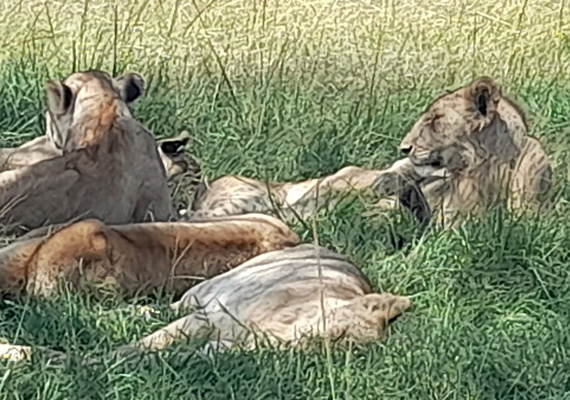
There are approximately 3,000 lions, along with numerous spotted hyenas, leopards, rhinoceroses, hippopotamuses, giraffes, cheetahs, and baboons, in addition to over 35 species of plains animals. The marshes by the Mara River are home to crocodiles. Ostriches, vultures, and flamingos are among the more than 350 bird species that have been identified.